
Sports nutrition jobs
As many as one-in-ten supplements are contaminated with ingredients and compounds prohibited in sport. As a result, many athletes fail doping tests because of the supplement products they use https://buyme4you.com. According to a study carried out by the Anti-Doping Knowledge Centre, product contamination was responsible for 8% of all anti-doping violations between 2105-2022.
Typically, water accounts for about 70% to 75% of a person’s body weight. However, this can vary depending on age, activity, climate and other factors. Water is also important for lubricating the joints and regulating the body temperature.
Informed-Sport, a programme of quality assurance for the sports nutrition industry and its suppliers, tests supplements independently for substances on the World Anti-Doping Agency’s (WADA’s) list of banned substances.
The International Society of Sports Nutrition (ISSN) is an association of sports nutritionists, sports scientists, and other individuals involved in the study and application of sports nutrition to athletic performance.
Informed Sport’s certification program requires every batch of supplements sold on the market to be tested for banned substances prior to sale, including testing the raw materials, finished product and post-certification blind sampling.
International society for sports nutrition
The International Society of Sports Nutrition (ISSN) provides an objective and critical review related to the intake of protein for healthy, exercising individuals. Based on the current available literature, the position of the Society is as follows:
Buckley and colleagues found that a ~ 30 g dose of a hydrolyzed whey protein isolate resulted in a more rapid recovery of muscle force-generating capacity following eccentric exercise, compared with a flavored water placebo or a non-hydrolyzed form of the same whey protein isolate. Indeed, the effect of this hydrolysate was such that complete recovery of muscle force-generating capacity had been achieved by six hours post supplementation, while the normal whey and placebo groups’ strength remained depressed 24 h later. In agreement with these findings, Cooke et al. had 17 untrained men complete an eccentric-based resistance training bout to invoke muscle damage and supplemented with either carbohydrate or a hydrolyzed whey protein isolate. Three and seven days after completing the damaging exercise bout, maximal strength levels were higher in the hydrolyzed whey protein group compared to carbohydrate supplementation. Additionally, blood concentrations of muscle damage markers tended to be lower when four ~30-g doses of a hydrolyzed whey protein isolate were ingested for two weeks following the damaging bout. Beyond influencing strength recovery after damaging exercise, other benefits of hydrolyzed proteins have been suggested. For example, Morifuji et al. using an animal model reported that the ability of whey hydrolysates to increase skeletal muscle glycogen replenishment after exercise was greater when compared to BCAA ingestion. Furthermore, Lockwood et al. investigated the effects of ingesting either 30 g of hydrolyzed whey or two varying forms of whey protein concentrates during a linear resistance-training protocol over 8 weeks. Results indicated that strength and lean body mass (LBM) increased equally in all groups. However, fat mass decreased only in the hydrolyzed whey protein group. While more work needs to be completed to fully determine the potential impact of hydrolyzed proteins on strength and body composition changes, this initial study suggests that hydrolyzed whey may be efficacious for decreasing body fat. Finally, Saunders et al. had thirteen trained male cyclists complete a simulated 60-km time trial where they ingested either carbohydrate or carbohydrate and protein hydrolysate at equal intervals throughout the race as well as at the conclusion of the race. The authors reported that co-ingestion of a carbohydrate and protein hydrolysate improved time-trial performance late in the exercise protocol and significantly reduced soreness and markers of muscle damage. Two excellent reviews on the topic of hydrolyzed proteins and their impact on performance and recovery have been published by Van Loon et al. and Saunders .
Layman DK, Boileau RA, Erickson DJ, Painter JE, Shiue H, Sather C, et al. A reduced ratio of dietary carbohydrate to protein improves body composition and blood lipid profiles during weight loss in adult women. J Nutr. 2003;133:411–7.
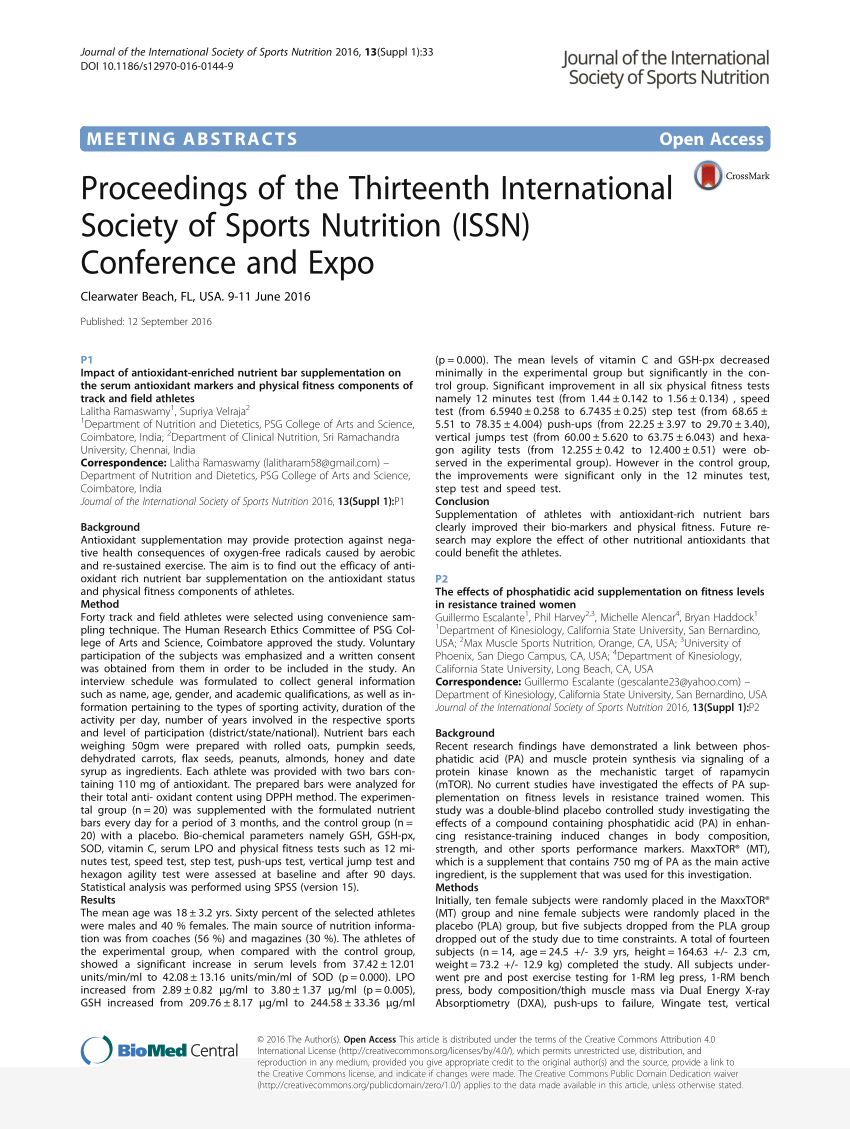
The International Society of Sports Nutrition (ISSN) provides an objective and critical review related to the intake of protein for healthy, exercising individuals. Based on the current available literature, the position of the Society is as follows:
Buckley and colleagues found that a ~ 30 g dose of a hydrolyzed whey protein isolate resulted in a more rapid recovery of muscle force-generating capacity following eccentric exercise, compared with a flavored water placebo or a non-hydrolyzed form of the same whey protein isolate. Indeed, the effect of this hydrolysate was such that complete recovery of muscle force-generating capacity had been achieved by six hours post supplementation, while the normal whey and placebo groups’ strength remained depressed 24 h later. In agreement with these findings, Cooke et al. had 17 untrained men complete an eccentric-based resistance training bout to invoke muscle damage and supplemented with either carbohydrate or a hydrolyzed whey protein isolate. Three and seven days after completing the damaging exercise bout, maximal strength levels were higher in the hydrolyzed whey protein group compared to carbohydrate supplementation. Additionally, blood concentrations of muscle damage markers tended to be lower when four ~30-g doses of a hydrolyzed whey protein isolate were ingested for two weeks following the damaging bout. Beyond influencing strength recovery after damaging exercise, other benefits of hydrolyzed proteins have been suggested. For example, Morifuji et al. using an animal model reported that the ability of whey hydrolysates to increase skeletal muscle glycogen replenishment after exercise was greater when compared to BCAA ingestion. Furthermore, Lockwood et al. investigated the effects of ingesting either 30 g of hydrolyzed whey or two varying forms of whey protein concentrates during a linear resistance-training protocol over 8 weeks. Results indicated that strength and lean body mass (LBM) increased equally in all groups. However, fat mass decreased only in the hydrolyzed whey protein group. While more work needs to be completed to fully determine the potential impact of hydrolyzed proteins on strength and body composition changes, this initial study suggests that hydrolyzed whey may be efficacious for decreasing body fat. Finally, Saunders et al. had thirteen trained male cyclists complete a simulated 60-km time trial where they ingested either carbohydrate or carbohydrate and protein hydrolysate at equal intervals throughout the race as well as at the conclusion of the race. The authors reported that co-ingestion of a carbohydrate and protein hydrolysate improved time-trial performance late in the exercise protocol and significantly reduced soreness and markers of muscle damage. Two excellent reviews on the topic of hydrolyzed proteins and their impact on performance and recovery have been published by Van Loon et al. and Saunders .
Sports nutrition degrees
Dr. Fischer’s background in higher education includes administration of in-class and online programs, development of new programs, and collaborative programming. Her academic focus includes public health, epidemiology, leadership, and program administration. Learn more about Dr. Fischer here.
Dr. Huberty brings with her a wealth of industry practice in both private and public sport and recreation settings. Research interests and publications focus on sport marketing and sponsorship, gender diversity within sport management, and sport leadership. Learn more about Dr. Huberty here.
A big part of a sports nutritionist’s job is to analyze an athlete’s complete lifestyle. That is, they take various factors like the foods the client eats, how much they eat, and even when they eat into consideration when developing a healthier plan for the future. Not only that, but sports nutritionists also examine the athlete’s training schedule, work schedule, and any medications or supplements they take in order to devise a well-informed nutrition plan that maximizes their client’s ability to do their job.

Dr. Fischer’s background in higher education includes administration of in-class and online programs, development of new programs, and collaborative programming. Her academic focus includes public health, epidemiology, leadership, and program administration. Learn more about Dr. Fischer here.
Dr. Huberty brings with her a wealth of industry practice in both private and public sport and recreation settings. Research interests and publications focus on sport marketing and sponsorship, gender diversity within sport management, and sport leadership. Learn more about Dr. Huberty here.
A big part of a sports nutritionist’s job is to analyze an athlete’s complete lifestyle. That is, they take various factors like the foods the client eats, how much they eat, and even when they eat into consideration when developing a healthier plan for the future. Not only that, but sports nutritionists also examine the athlete’s training schedule, work schedule, and any medications or supplements they take in order to devise a well-informed nutrition plan that maximizes their client’s ability to do their job.